

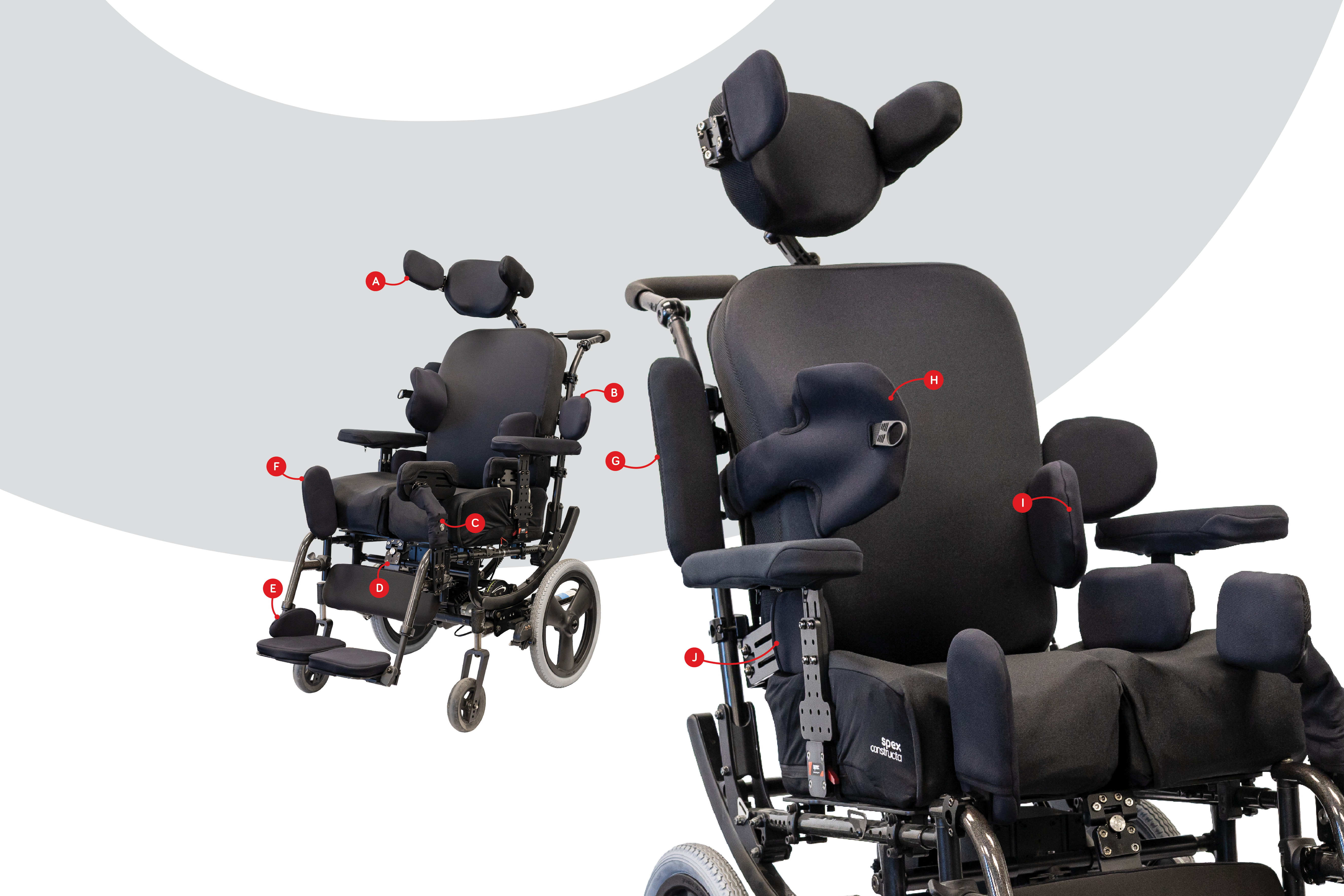
When it comes to wheelchair seating, there’s rarely a ‘one-size-fits-all’ solution. Every individual has unique postural needs, and sometimes the best outcomes come from looking at technology with fresh eyes. At Spex Seating, we believe our lateral supports and mounting hardware are more than just single-function accessories – they’re versatile tools for creative problem-solving.
Here are 10 inspiring ways prescribers have adapted Spex laterals to support posture and enable function:
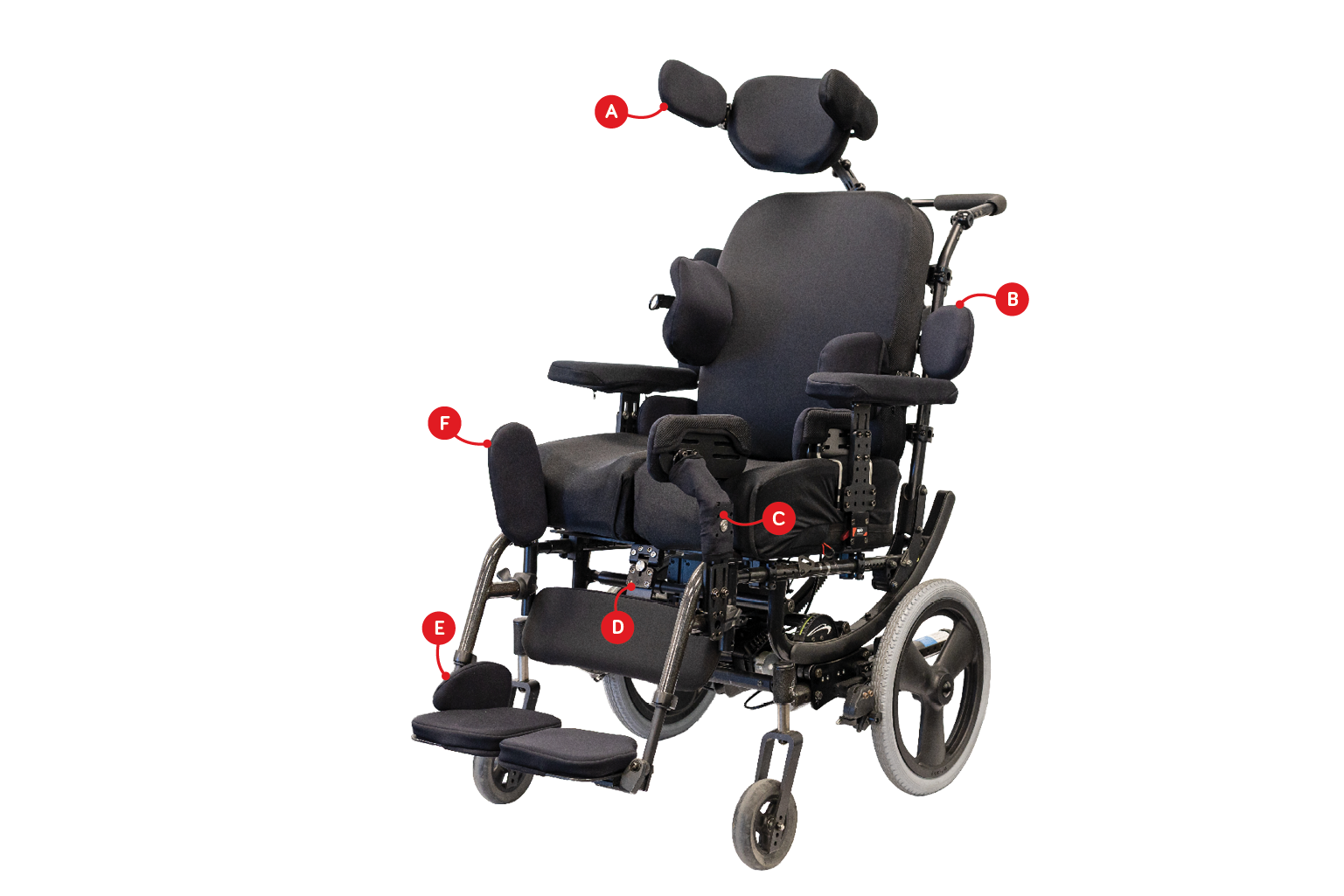
1 (A). Extra Lateral Mounted on Head Support
What it uses: Start with a Spex Adjustable Lateral Head Support and replace one of the sides with a Spex Lateral Trunk Support Pad from our range. Choose a pad with increased padding for extra comfort.
Purpose: Maintain neutral head alignment; correct or accommodate user’s head position.
Clinical example: Supporting head positioning needs due to unilateral muscle tightness or secondary presentations from visual neglect following a CVA (cerebrovascular accident, or stroke).
2 (B). Upper Arm/Elbow Support (Low Option)
What it uses: Spex Broad Lateral Trunk Support Pad mounted to the wheelchair back canes with a Direct Mount Back Support Bracket.
Purpose: Posterior support for the upper limb when resting on the arm support pad.
Clinical example: Beneficial for users with reduced upper limb stability and strength due to neurological conditions.
3 (C). Knee Lateral Support with Swing-Away Feature
What it uses: Spex 8″ Thigh Support Pad (longer options available) with Reduced-Depth Axial Lateral Trunk Support Hardware, mounted onto the leg rest tube with a Direct Mount Back Support Bracket.
Purpose: Support the thigh in optimal alignment; accommodate hip positioning.
Clinical example: Helps manage hip instability, external rotation, or abduction from tightness or reduced range of motion
4 (D). Rigid Calf Panel
What it uses: Spex Thigh Support Pad (different lengths available) mounted to a Straight Lateral Swing-Away Bracket.
Purpose: Posterior support for the lower leg.
Clinical example: Inhibits knee flexion tendency or provides support for contractures.
5 (E). Lateral Upstand on Footplate
What it uses: Spex Lateral Trunk Support Pad (e.g. Teardrop Pad) mounted to an Elbow Bracket from the Spex Arm Support range.
Purpose: Maintain neutral foot position and prevent lateral drift.
Clinical example: Offers comfort and skin protection to the lateral aspect of the foot.
6 (F). Lateral Knee Support
What it uses: Spex Narrow Straight Lateral Pad mounted to the leg rest tube using a Direct Mount Back Support Bracket.
Purpose: Provides localised support at the knee.
Clinical example: Helps to guide optimal lower limb alignment.
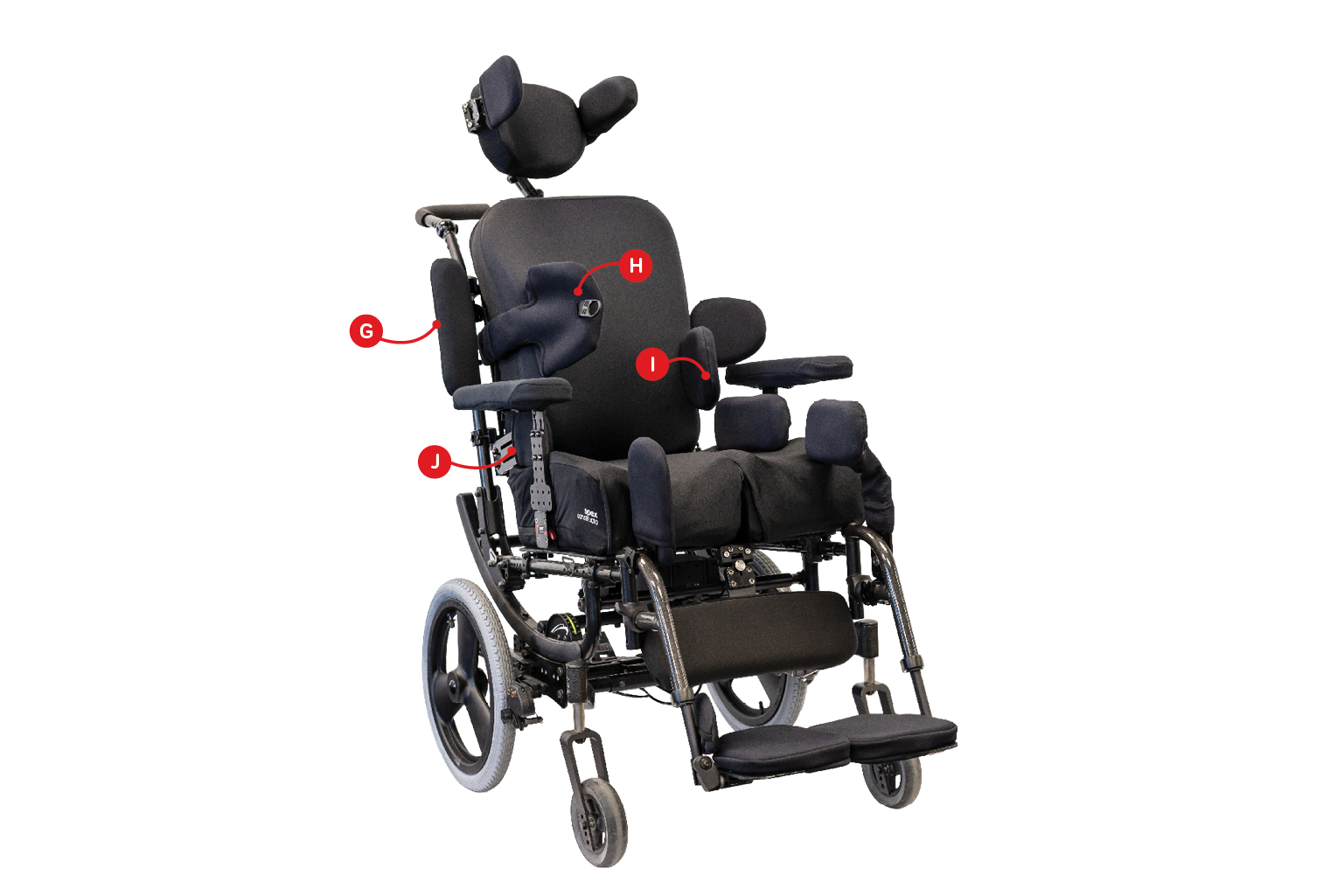
7 (G). Upper Arm/Elbow Support – Tall Option
What it uses: Spex 10″ Thigh Support Pad (other lengths available) mounted to the wheelchair back canes using a Direct Mount Back Support Bracket (or a Standard Lateral Bracket mounted to the edge of the back shell).
Purpose: Stabilise and align the upper limb and shoulder girdle.
Clinical example: Helps maintain shoulder joint stability.
8 (H). Extended Lateral Trunk Support
What it uses: Spex Bi-angular Trunk Support Pad with Axial Hardware on Extended Deep Contour Back Support bracketry.
Purpose: Accommodate asymmetric trunk presentations if required.
Clinical example: Helps to support and stabilise trunk rotation presentation, particularly with thick, contoured back supports like the Spex Supershape.
9 (I). Lower Rib Lateral Trunk Support with Extra Padding
What it uses: Spex Broad Lateral Tunk Support Pad with added pressure relief foam on Standard Swing-Away Hardware.
Purpose: Lateral trunk support.
Clinical example: Stabilises trunk alignment and can correct trunk presentation if reducible.
- Pelvic/Hip Lateral Support
What it uses: Spex Narrow Straight Lateral Trunk Support Pad mounted with a Deep Contour L-Bracket and Extended Plate.
Purpose: Support and stabilise the pelvis.
Clinical example: Positions the pelvis optimally when the trunk is unstable or in an asymmetric position.
Thinking Outside the Box
These are just a handful of creative ways Spex Lateral Supports can be used, but the possibilities go well beyond this list. With a problem-solving mindset, laterals can be adapted to meet the unique postural and functional needs of each user.
After all, it’s not about seeing laterals as a product with a fixed purpose, it’s about seeing them as tools for shaping better lives. Reach out to our team of experts today to discuss your creative ideas!